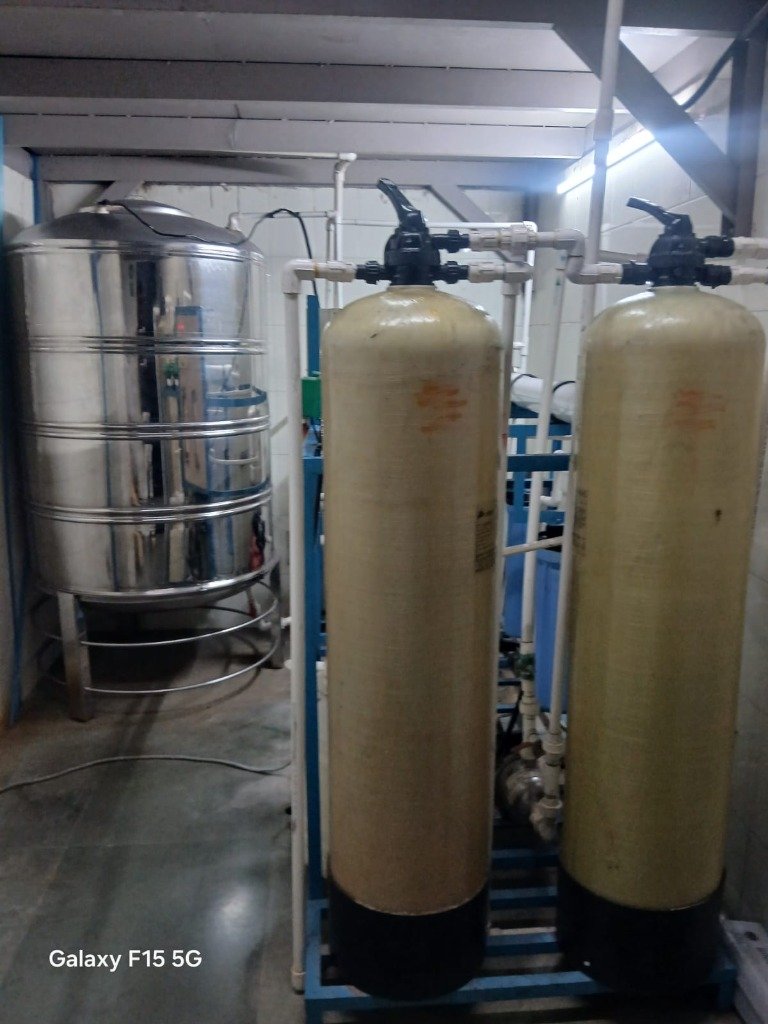
Across urban Karnataka—including Whitefield, Sarjapur, Electronic City, and North Bangalore, as well as Mysore and Hubli—borewell depths regularly reach between 800 to 1,500 feet. Deep aquifer extraction inevitably dissolves extensive subterranean mineral beds, leading to two distinct water quality challenges: High Total Dissolved Solids (TDS) and High Calcium/Magnesium Hardness.
Key Rule of Thumb for Homeowners & Facility Managers:
A Water Softener treats water for your plumbing and skin (eliminating scale). An RO Plant treats water for your body (eliminating heavy metals, pathogens, and dissolved salts).
1. Total Dissolved Solids (TDS)
TDS measures all inorganic minerals and salts dissolved in water (including sodium, chlorides, sulfates, calcium, nitrates, and trace heavy metals). The Bureau of Indian Standards (BIS 10500) recommends drinking water TDS between 150 to 300 ppm. When borewell TDS exceeds 500 ppm, water tastes brackish, mineral-heavy, and can pose kidney stress over extended years. Only Reverse Osmosis (RO) membranes can remove dissolved mineral ions and reduce TDS.
2. Total Hardness (Calcium & Magnesium)
Hardness specifically denotes dissolved divalent cations, predominantly Calcium (Ca²⁺) and Magnesium (Mg²⁺). Even if water has a relatively moderate TDS of 400 ppm, it might have severe hardness of 350 ppm. When heated in geysers or exposed to air on chrome taps, these ions precipitate out as chalky insoluble calcium carbonate (CaCO3) limescale.
The Recommended Hybrid Setup:
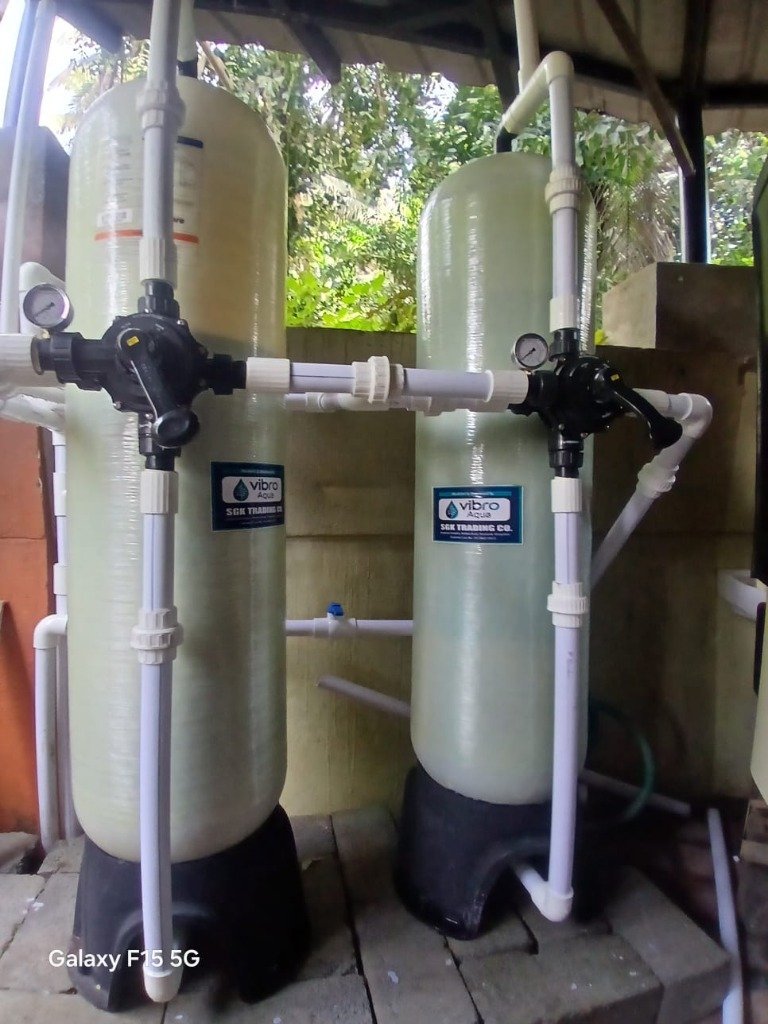
- At Point of Entry (Borewell / Sump): Install a VibroAqua Automated Duplex FRP Water Softener. This softens 100% of the water feeding all overhead tanks, ensuring zero scale in pipes, solar heaters, geysers, showerheads, washing machines, and sanitaryware.
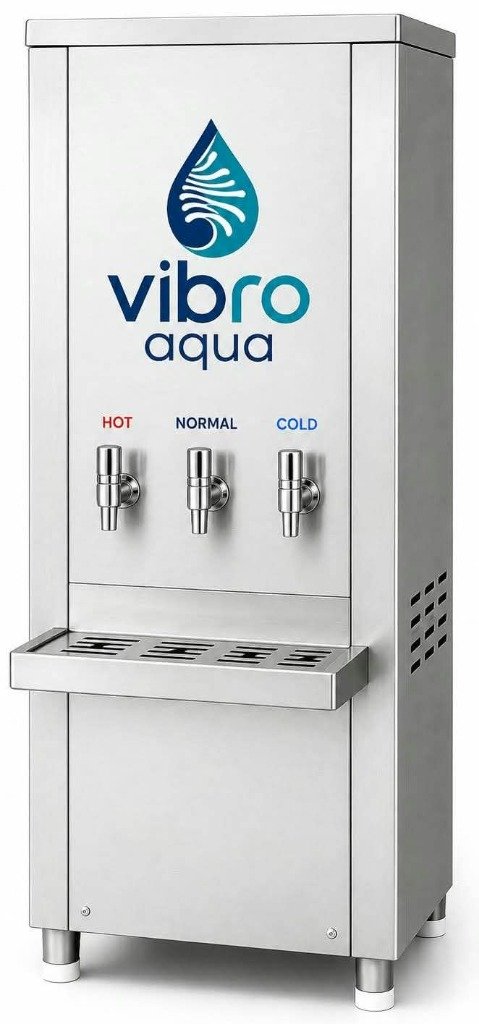
- At Point of Consumption (Kitchen / Cafeteria): Install a VibroAqua Reverse Osmosis (RO) Purification Unit. The RO unit takes the softened water and purifies it down to the optimal 150-200 ppm TDS, eliminating 99.8% of contaminants for drinking and cooking.